
Summarize with AI
Most B2B companies are still posting generic content into the void and hoping the right customers show up.
The real game isn't just being on social media — it's knowing exactly where your customers already hang out, and what they're saying about their problems when they aren't expecting a vendor to be listening.
Why Social Media for B2B Customer Discovery?
The B2B buying process has changed. Decision-makers don't wait for a sales call to start their research anymore — they read reviews, join communities, ask peers for recommendations, and compare vendors long before anyone in sales knows they exist.
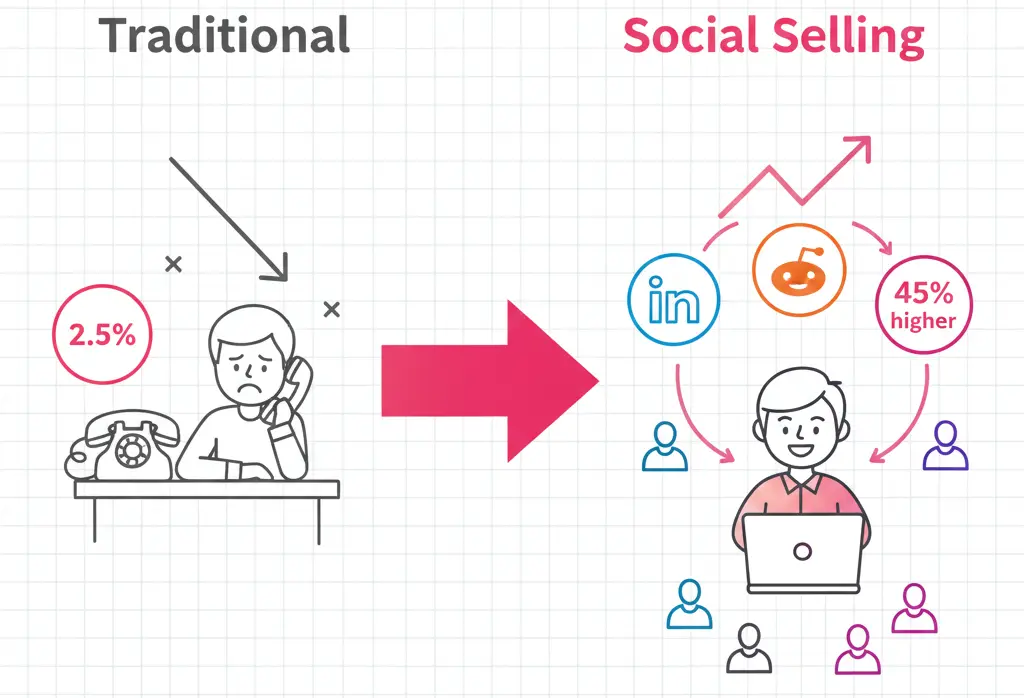
That shift matters because the earliest, most honest version of a buyer's problem rarely shows up in a demo request. It shows up as a complaint in a subreddit, a "what do you all use for this?" thread, or a reply to a competitor's post. Companies that find and act on that stage of the conversation get to the buyer before the RFP even exists.
The Platforms Where B2B Customers Actually Show Up
Not every social platform delivers the same kind of signal. Here's what each one is actually good for, and how to find customers on it.
LinkedIn: The Obvious (But Essential) Choice
LinkedIn is the default B2B platform for a reason: every profile is effectively a self-maintained database of job titles, industries, company size, and professional interests. Sales Navigator turns that into a targeting tool, letting you filter by seniority, company growth signals, recent job changes, and engagement patterns.
The platform rewards a consistent, useful presence over sporadic campaigns — a steady cadence of genuinely helpful posts and comments compounds faster than an occasional big push.
Facebook Groups: The Underrated Community Layer
Private Facebook Groups host some of the most engaged B2B communities online — niche SaaS user groups, industry mastermind communities, and professional associations. These groups produce exactly the peer-to-peer conversations where buying signals emerge naturally: "What tool do you use for…?" or "Anyone tried X software?"
Reddinbox already monitors Facebook for these conversations, so you don't have to join and lurk in dozens of groups manually to catch them.
X (Twitter): Real-Time Intelligence
X is best for industry news, thought leadership, and direct access to decision-makers who post and reply in public. Conversations move fast here — trending topics surface emerging needs, and a well-placed reply to the right thread gets you in front of a prospect before your competitors even notice the conversation exists. Reddinbox tracks X in real time so you can catch those threads while they're still live.
Reddit: The Contrarian Play
Here's the take most B2B teams miss: Reddit consistently outperforms LinkedIn for early-stage problem discovery.
Where LinkedIn shows you who might need your solution, Reddit shows you exactly what problem people are trying to solve — in their own words, with context, frustration, and often a budget mentioned. Subreddits like r/SaaS, r/Entrepreneur, r/startups, and industry-specific communities are full of unfiltered "what should I use for…" threads and feature-gap complaints about existing tools.
Quora carries a similar kind of problem-first question, but Reddinbox doesn't monitor it yet — it's on the roadmap. For now, Reddinbox's Reddit search and the free subreddit finder are the fastest way to map the right communities for your niche before you start monitoring them.
The challenge with Reddit specifically is scale: there's no realistic way to manually read every relevant thread across thousands of communities. That's the gap tools built for this are meant to close.
10 Proven Methods to Find B2B Customers on Social Media
Platform selection matters, but execution is what actually generates pipeline.
1. LinkedIn Sales Navigator: Beyond Basic Search
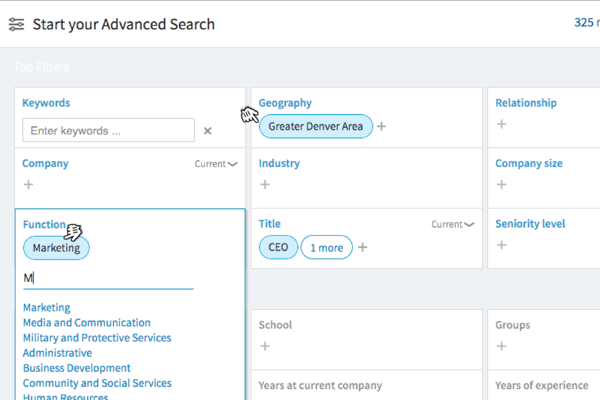
Sales Navigator isn't just advanced search — it's a way to systematize account intelligence. Lead Builder lets you save searches combining job title, geography, company size, industry, and behavioral signals like recent posts or job changes, then keeps surfacing new matches as they appear.
Pro move: set up alerts for job changes at your target accounts. A newly hired VP of Sales is a natural moment to reach out.
2. Social Listening: Track Conversations at Scale
Social listening means monitoring brand mentions, competitor discussions, industry keywords, and problem statements across platforms instead of waiting for someone to tag you. While comprehensive customer research requires more than one method, listening is what tells you a conversation is happening at all.
Worth monitoring specifically:
- Your product category + "looking for"
- Competitor names + "alternative" or "switching from"
- Industry pain points + "solution" or "tool"
If you want a read on how a specific audience is actually feeling about a topic or a competitor, not just whether they're mentioning it, run it through the free Reddit sentiment analysis tool — it's a faster gut-check than reading every thread yourself.
3. Join (and Participate in) Industry-Specific Groups
Lurking doesn't count. Active participation in 5–10 highly relevant groups generates more qualified conversations than a passive presence in a hundred.
Answer questions without pitching. Share relevant insights. Ask thoughtful questions. When someone eventually posts "looking for recommendations for [your category]," you'll already have credibility instead of showing up as a stranger with a product to sell.
4. Deploy Targeted Social Ads With Precision
Paid social works when the targeting is surgical, not when it's a generic brand-awareness campaign. Build audiences around specific signals instead:
- Job title and seniority (e.g. Director of Marketing)
- Company size band
- Interests relevant to your category
- Recent engagement with competitor content
It's worth testing LinkedIn lead-gen forms against a plain website conversion campaign — a higher cost-per-lead on LinkedIn sometimes still wins on lead-to-opportunity quality. Before you commit real ad budget, confirm the targeting is actually precise: vague "marketing professionals in the US" audiences burn spend fast with little to show for it.
5. Content-Based Lead Magnets
Gated content works when it delivers immediate, tactical value — a calculator, a template, or a short framework addressing one specific problem your ICP has, not a generic "ultimate guide."
Promote it through organic posts, boosted content to warm audiences, and retargeting to site visitors. The bar: the ungated teaser needs to be good enough on its own that people actively want the rest.
6. Employee Advocacy Programs
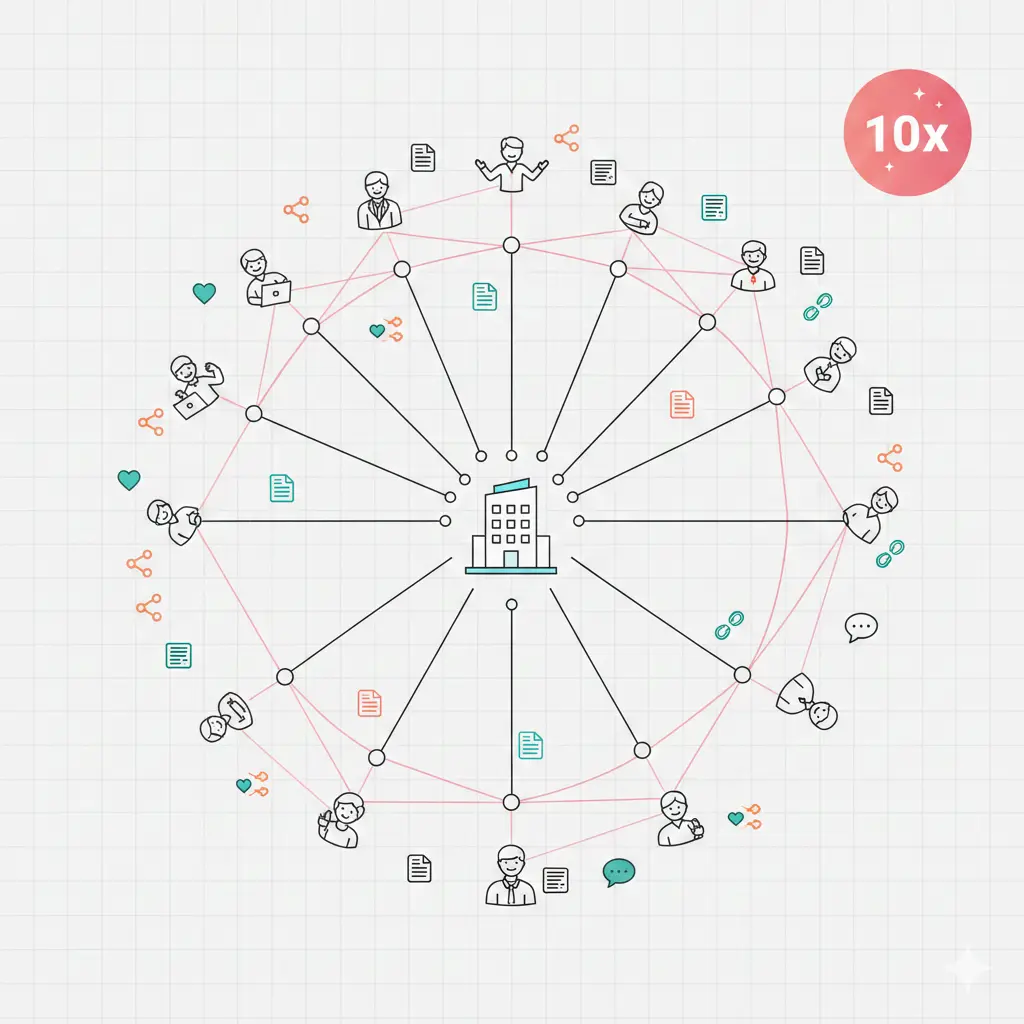
Your team's combined personal networks reach further than your company page ever will. Give employees pre-written posts they can customize, encourage sharing industry news and helpful resources in their own voice, and track which posts actually get engagement so you know what to make more of.
7. Engage in Relevant Conversations (Don't Just Post)
Thoughtful comments on a prospect's post put you in front of them without asking for anything. LinkedIn's algorithm also tends to favor content that sparks discussion, so a good comment can outperform a standalone post.
Build a short list — 50 to 100 accounts that match your ICP or target list — and spend a few minutes a day engaging with what they share. When you eventually message them, you won't be a stranger.
8. Intent Data and Buying-Signal Tracking
Intent data tells you which companies are actively researching topics related to your product. Layered with social signals — who's discussing a relevant pain point, who's engaging with competitor content — it tells you not just who fits your ICP, but who's in-market right now.
This is exactly what Buying Signals automates: you describe your product once, and Reddinbox continuously scans Reddit, X, and Hacker News for people showing genuine purchase intent, then delivers a ranked, scored feed instead of you having to search manually every day.
9. Competitor Analysis: Monitor Their Audiences
The people already engaging with your competitors have demonstrated interest in your category — they just haven't found you yet. On LinkedIn, check "People Also Viewed" from competitor employees. On X, look at who's replying to and engaging with competitor accounts. Facebook groups built around a competitor's product often welcome an honest alternative perspective.
The free Reddit competitor analysis tool does this for Reddit specifically — it pulls how a competitor is actually discussed across communities so you can see where the openings are before you post anything.
Don't poach aggressively. Show up where competitors are falling short and add value there.
10. Reddit Problem Discovery (The Reddinbox Approach)
Most B2B strategies focus only on solution-aware prospects — the people already comparing named products. Reddit captures the earlier, messier stage: problem-aware people who haven't decided what category of tool they even need yet.
Worth searching for specifically:
- "Alternative to [competitor]" threads
- Feature-request posts pointing at an unmet need
- Troubleshooting threads that reveal a tool's limitations
- "What should I use for…" questions
Reading every relevant thread manually doesn't scale past a handful of subreddits. Reddinbox is built to do that continuously — surfacing high-intent Reddit (and X, Hacker News, Bluesky, and Facebook) conversations automatically, so you see what your audience actually cares about before it ever reaches LinkedIn.
Essential Tools for B2B Social Customer Discovery
The right tools turn social media from a time-sink into a real pipeline source.
LinkedIn Sales Navigator is close to non-negotiable for serious B2B prospecting — the targeting and lead-recommendation features pay for themselves once you're generating even a handful of qualified conversations a month from it.
Social listening platforms like Hootsuite, Sprout Social, or Mention track brand mentions and keyword conversations at scale, which answers "who's discussing my category right now?" across the bigger, more mainstream platforms.
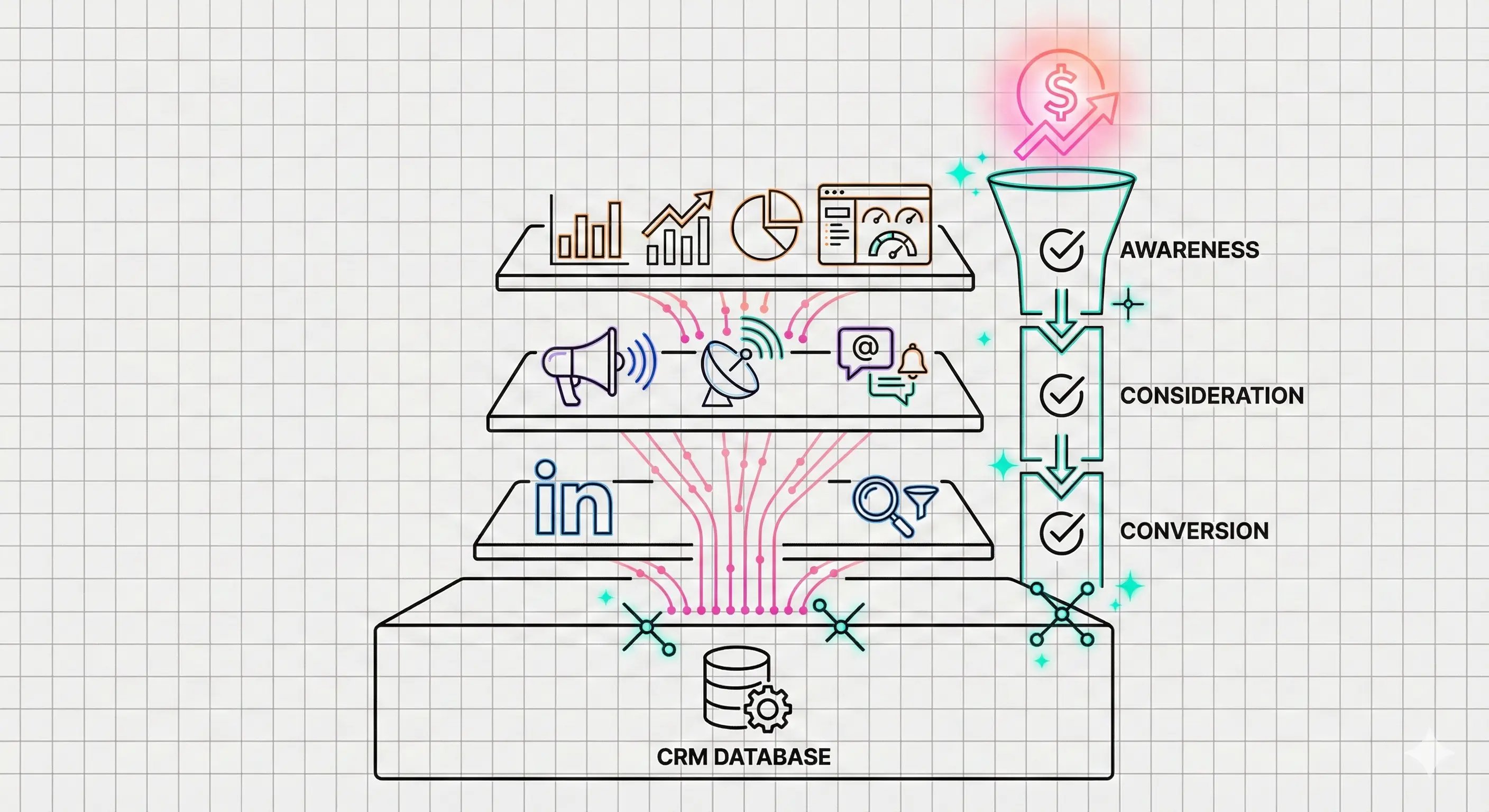
Reddinbox covers the gap most listening tools miss: Reddit, X, Hacker News, Bluesky, and Facebook conversations, surfaced and scored for buying intent instead of dumped into an unsorted mention feed. Combine a platform-native tool (Sales Navigator) with cross-platform listening and a specialized tool for the communities general-purpose listening tools under-cover, and you get a stack that catches a prospect at nearly every stage.
What This Looks Like in Practice
Rather than another set of case-study statistics, here's what a Buying Signals feed actually surfaces once it's running — these are the categories of posts it's built to catch, not any single customer's results:
- "Switching from" threads. Someone naming a specific competitor and asking what people moved to instead — the highest-intent category, because they've already decided to leave.
- Feature-gap complaints. A post describing something their current tool can't do, phrased as a workaround request rather than a product comparison — these convert well because the person is already problem-aware, just not solution-aware yet.
- "What do you use for…" threads. Broad, open questions in a relevant subreddit or Facebook group, where being an early, helpful reply (not a pitch) is what gets noticed.
The pattern across all three: the person isn't asking to be sold to. They're asking a peer group for a recommendation, and showing up there with something genuinely useful is what turns into a conversation later.
Start Finding B2B Customers Today
Finding B2B customers on social media isn't complicated, it's systematic. Pick one or two platforms where your ICP actually spends time, set up monitoring for buying signals and competitor mentions, and engage authentically before you pitch anything.
Ready to see what your target customers are actually saying on Reddit, X, and beyond? Try Reddinbox to surface buying signals and pain points before your competitors find them.
FAQs
How do I get B2B buyers to notice my LinkedIn posts — company page vs people posting?
People buy from people. Personal profiles typically get more reach and engagement than company pages because the algorithm favors individual interaction. Use employee advocacy to amplify company content through personal networks instead of relying on the brand page alone.
What are low-cost or no-cost ways to get the first 5–10 B2B customers via social channels?
Engage directly in niche communities on Reddit, Facebook, or Slack where your prospects discuss problems. Provide helpful, non-salesy answers that position you as an expert, then follow up with the people whose problems match what you built — not a cold pitch.
How do I make "boring" B2B product categories interesting on social media?
Focus on the human problems your product solves, not the feature list. Relatable workplace scenarios and "behind the scenes" build-in-public content humanize the brand more than another feature announcement.
Can social media replace paid lead marketplaces for B2B lead gen?
It's a different trade-off, not a straight replacement. Social takes longer to ramp up, but it builds relationships and reaches prospects earlier in their buying journey — often before they're a lead any marketplace would sell you.
For niche B2B products, should I run broad LinkedIn campaigns or do ABM and micro-targeting?
Micro-targeting and account-based marketing (ABM) are almost always the better use of budget for a niche product. Broad campaigns spend most of their budget on audiences who were never going to buy.
How do I identify which social visitors are actual potential customers, especially early on?
Look for specific engagement signals — questions about implementation, pricing, or comparisons to competitors, not just likes. Check whether the account's job title and industry match your ICP before spending time on outreach.
What's the best social network for B2B lead generation — LinkedIn vs Twitter/X vs others?
LinkedIn remains the default for most B2B due to its professional context and targeting data. Reddit and X are better for earlier-stage discovery and technical audiences. The right platform is simply wherever your specific buyers already are.
How do I target decision-makers on social without being spammy?
Engage with their content genuinely before sending a connection request. When you do connect, lead with something useful — a relevant insight or resource — instead of asking for a meeting immediately.
Are community groups (Slack, LinkedIn groups, subreddits) useful for B2B customer acquisition?
Yes, because members have already self-selected around a shared interest, which makes the intent signal stronger than a cold audience. It requires genuine contribution over time, not drive-by link dropping — the payoff comes after you've built some standing in the community.
Which metrics should I prioritize on social when measuring B2B customer acquisition?
Prioritize consumption signals — click-throughs to high-intent pages and direct replies or DMs from accounts that match your ICP — over impressions or follower counts, which say little about pipeline.
Are there recommended tools or workflows for finding contact info and validating accounts discovered on social?
Enrichment tools like Apollo or ZoomInfo can add contact data to a social profile, but always verify an email before cold outreach to protect your sender reputation — a manual LinkedIn profile check is often the most reliable step for a lead that matters.