
Summarize with AI
Here's something worth taking seriously: research from Twilio's State of Personalization report has repeatedly found that a large share of customers stop buying from brands that get personalization wrong — pushing irrelevant offers, generic messaging, or ignoring stated preferences.
Not because of bad products. Not because of pricing. But because those brands clearly didn't understand their customers.
The good news? In 2026, you don't need a massive budget to do world-class customer research. You just need the right methods and methodologies — and the discipline to actually use them. This guide covers 10 customer research techniques, the tools built for each, and how to turn what you learn into decisions.
TL;DR
Customer research is the systematic process of understanding your customers' needs, behaviors, and motivations through data collection and analysis.
There are two main research approaches: primary research (data you collect firsthand like surveys and interviews) and secondary research (leveraging existing data like reviews and social listening). You'll also work with qualitative data (the "why" behind behavior) and quantitative data (the "what" and "how many").
The 10 most effective methods are surveys, one-on-one interviews, focus groups, usability testing, product analytics, review mining, social media listening, competitive analysis, field trials, and observational research.
Modern trends show that marketers who research quarterly or more often report meaningfully better outcomes than teams that research once a year or less, and the best teams are blending AI-powered automation with human interpretation.
The bottom line: Use at least 3+ methods together, research continuously (not just once), and let data guide your product decisions.
10 Customer Research Methods Compared
| Method | Qual/Quant | Primary/Secondary | Best for | Time | Cost | Tools |
|---|---|---|---|---|---|---|
| Surveys | Both | Primary | Quantitative data at scale | Days | Low | Typeform, Google Forms |
| Interviews | Qualitative | Primary | Deep motivations & pain points | Weeks | Medium | Zoom, Dovetail |
| Focus groups | Qualitative | Primary | Testing concepts | Days-weeks | Medium-high | In-person or Zoom |
| Usability testing | Qualitative | Primary | UX friction | Days | Medium | Maze, UserTesting |
| Product analytics | Quantitative | Primary | Behavior at scale | Ongoing | Low-medium | Mixpanel, PostHog |
| Review mining | Qualitative | Secondary | Passive feedback | Hours | Low | Reddinbox, G2 |
| Social listening | Both | Secondary | Real-time sentiment & trends | Ongoing | Low-medium | Reddinbox, Brandwatch |
| Competitive analysis | Both | Secondary | Positioning & gaps | Days | Low | Reddinbox, spreadsheets |
| Field trials / beta testing | Qualitative | Primary | Real-world conditions | Weeks | Medium | In-app widgets, Slack |
| Observational research | Qualitative | Primary | Unstated behaviors | Days-weeks | Medium | Hotjar, FullStory |
What is Customer Research?
Customer research is the systematic process of gathering and analyzing data to understand your customers' needs, preferences, behaviors, and motivations.
It's different from (but often confused with) market research, customer experience research, and user research.
Market research looks at broader industry trends, competitor landscapes, and market sizing. Customer experience research focuses specifically on touchpoints and interactions across the customer journey. User research zeroes in on product usability and interface design.
Customer research sits at the intersection—it's about understanding who your customers are, what problems they face, and how they make decisions.
Why does this matter?
Because most buyers now prefer brands that personalize their experience over ones that don't. And you can't personalize anything if you don't understand your audience.
Customer research helps you:
- Prevent building products nobody wants
- Reduce customer churn by addressing real pain points
- Improve product-market fit through validation
- Enable personalization at scale
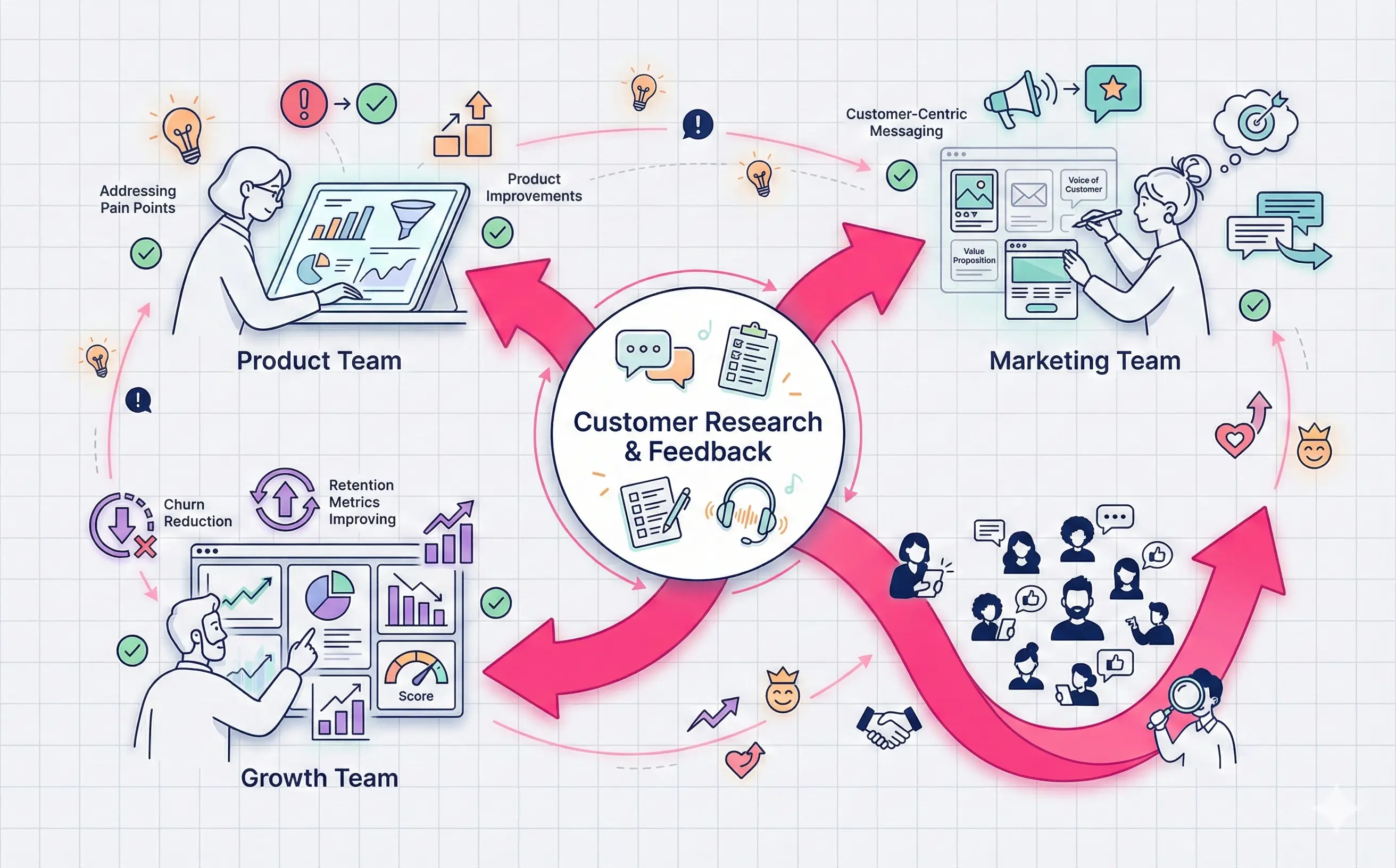
The brands that win in 2026 aren't guessing what customers want. They're building continuous feedback loops that inform every product, marketing, and growth decision.
Understanding Research Approaches: Primary vs Secondary
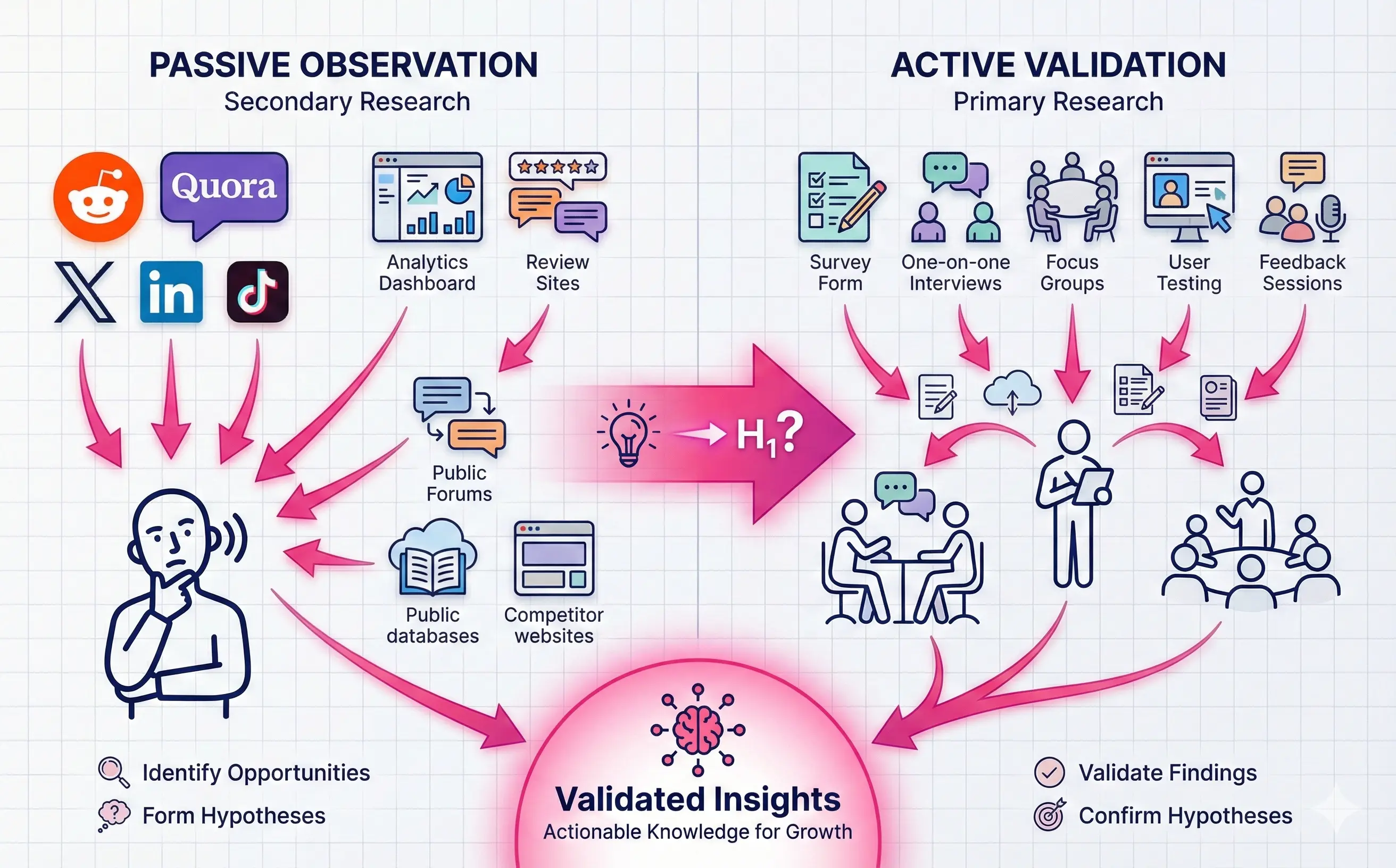
Before diving into specific methods, you need to understand the two fundamental research approaches.
Primary Research
Primary research means collecting data firsthand for your specific goals.
You design the study, you ask the questions, you collect the responses. Examples include surveys you create, interviews you conduct, and usability tests you run.
Pros: Highly specific to your needs, proprietary insights your competitors don't have, full control over methodology.
Cons: Time-intensive to plan and execute, requires resources (budget, tools, people).
Secondary Research
Secondary research means leveraging data that already exists.
You're not creating new data—you're analyzing industry reports, mining customer reviews, monitoring social conversations, or studying competitor positioning.
Pros: Fast to gather, cost-effective, provides broad perspective on industry trends.
Cons: May not be specific enough for your exact questions, data quality varies by source.
Here's the thing most teams get wrong: they pick one approach and ignore the other.
The smartest researchers blend both methods. Use secondary research to identify opportunities and form hypotheses. Then validate with targeted primary research.
And don't sleep on social media as secondary research. As Brandwatch points out, social platforms are essentially "a continuously running, worldwide focus group" where billions of people share unfiltered thoughts every day.
Qualitative vs Quantitative: Two Sides of the Research Coin
Beyond primary and secondary, you'll also work with two types of data.
Qualitative Data (The "Why"):
This is the rich, contextual stuff—open-ended survey responses, interview transcripts, observation notes, customer quotes.
Qualitative research reveals motivations, feelings, and the "why" behind behaviors. It's messy and harder to analyze, but it uncovers insights that numbers alone never will.
Quantitative Data (The "What" and "How Many"):
This is numerical, measurable data—survey ratings, analytics metrics, conversion rates, time on page.
Quantitative research shows patterns at scale. It tells you WHAT customers do and HOW MANY do it, but not necessarily WHY.
Here's the secret: 56% of elite marketers research at least monthly, and the best ones blend both approaches.
Quantitative data shows WHAT customers are doing. Qualitative research reveals WHY they're doing it.
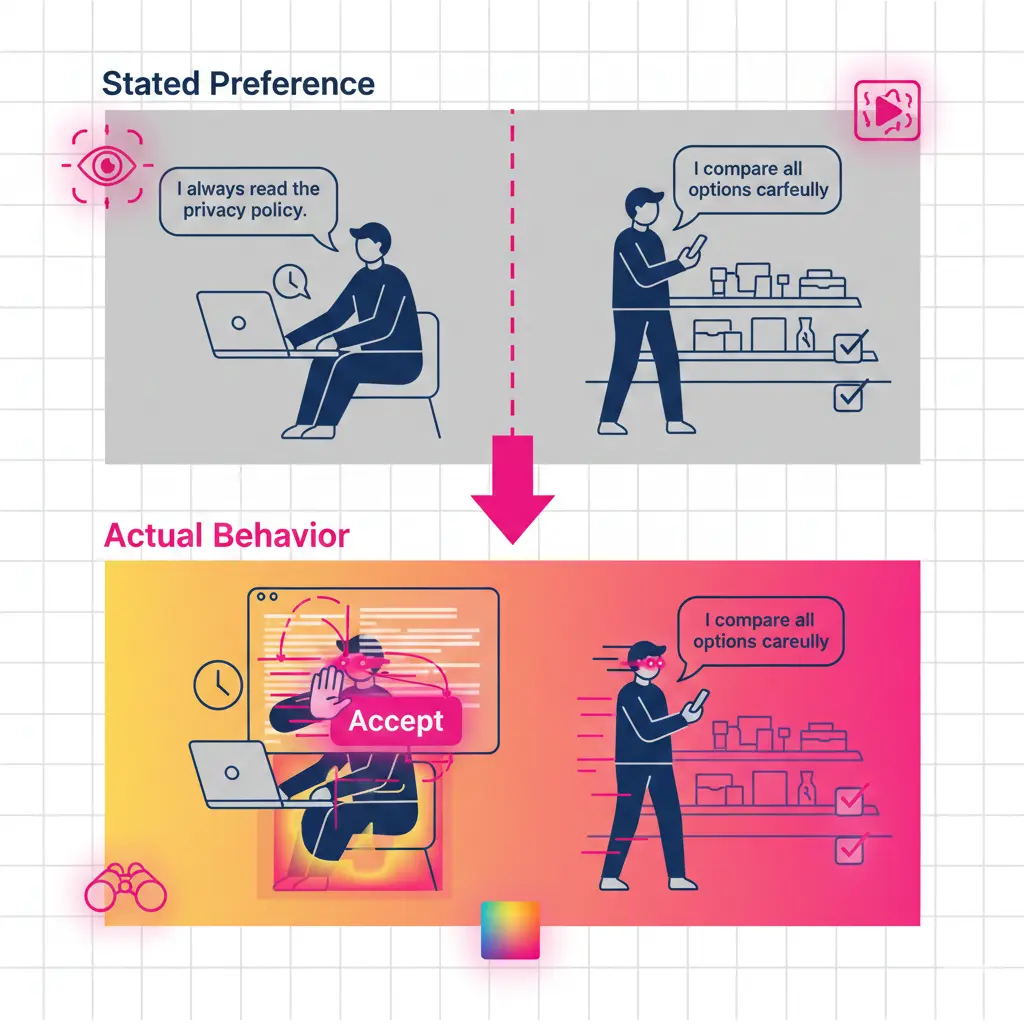
There's often a gap between what customers SAY they do (qualitative, self-reported) and what they ACTUALLY do (quantitative, behavioral data). Smart teams use both to catch contradictions and get closer to truth.
10 Customer Research Methods That Actually Work
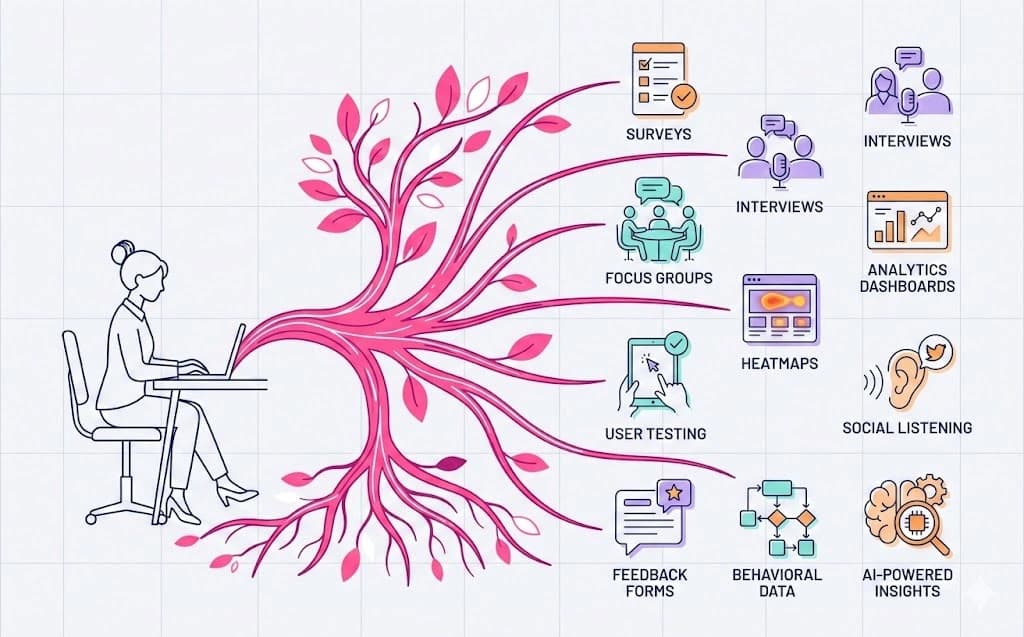
Modern customer research requires a toolkit approach. Here are 10 proven methods used by leading brands in 2026—and when to use each one.
1. Surveys and Questionnaires
Best for: Gathering quantitative data at scale
Surveys are the workhorse of customer research. Online forms with a mix of closed-ended questions (ratings, multiple choice) and open-ended questions (text boxes for qualitative feedback).
How it works: Tools like SurveyMonkey, Typeform, and Google Forms let you distribute surveys via email, website popups, or social media. You can reach hundreds or thousands of customers quickly.
Pro tip: Keep surveys under 10 questions for higher completion rates. Survey best practices suggest starting with the most important question first—don't assume people will finish.
Tools: SurveyMonkey, Typeform, Google Forms, Survicate
A starter question bank you can copy:
- What were you trying to accomplish when you found us?
- What did you try before this? What didn't work about it?
- On a scale of 1-10, how disappointed would you be if you could no longer use [product]? (the classic PMF question)
- What's the one feature you'd be most upset to lose?
- What almost stopped you from signing up / buying?
2. One-on-One Customer Interviews
Best for: Deep understanding of motivations and pain points
Interviews are 30-60 minute conversations with target customers where you dig deep into their needs, frustrations, and decision-making process.
How it works: Schedule calls with current customers, prospects, or churned users. Ask open-ended questions and follow the conversation wherever it leads.
Pro tip: Ask "why" five times to get to root causes. Don't pitch your product—listen more than you talk. The goal is to challenge your assumptions, not confirm them.
This is where qualitative research shines—you'll hear the exact language customers use to describe their problems, which becomes gold for marketing messaging.
A 5-question script to start from:
- Walk me through the last time you ran into [problem]. What happened?
- What have you tried to solve it? What worked, what didn't?
- If you had a magic wand, what would the ideal solution look like?
- What made you decide to try [product/category] specifically?
- What almost stopped you? What are you still unsure about?
3. Focus Groups
Best for: Testing concepts and gathering diverse perspectives
Focus groups are facilitated discussions with multiple participants (typically eight or fewer, according to research best practices) to explore reactions to ideas, products, or messaging.
How it works: Recruit a group of customers or prospects, present concepts or prototypes, and guide a structured conversation about their opinions.
Pro tip: Mix customer segments to identify differences in needs across personas. But beware of groupthink—dominant personalities can skew results, so consider one-on-one interviews for controversial topics.
Warning: Focus groups tell you what people SAY they'd do, not what they actually do. Always validate with behavioral data.
4. Usability Testing
Best for: Identifying friction in user experience
Usability testing means watching real users attempt to complete tasks with your product, website, or prototype while thinking aloud.
How it works: Give users a specific goal ("Find and purchase a blue t-shirt in size medium") and observe where they struggle, get confused, or give up.
Pro tip: Don't guide them or explain how things work. Observe natural behavior. Their confusion is your signal—if they can't figure it out, your design needs work.
Tools: Maze, UserTesting, Hotjar, FullStory
5. Product Analytics
Best for: Understanding actual behavior at scale
Product analytics track how customers interact with your product—clicks, page views, time spent, conversion funnels, drop-off points, feature usage.
How it works: Install tracking tools that capture user behavior automatically. Build dashboards to monitor key metrics over time.
Pro tip: Analytics show WHAT happens, but not WHY. When you see a spike in churn or a drop in conversion, pair the data with qualitative interviews to understand the cause.
Tools: Mixpanel, Amplitude, Google Analytics, Heap
6. Review Mining
Best for: Passive feedback collection without direct outreach
Review mining means analyzing customer reviews on platforms like G2, Trustpilot, app stores, Amazon, and Reddit to identify patterns in feedback.
How it works: Read through reviews (yours and competitors') looking for recurring complaints, feature requests, and use cases you didn't expect.
Pro tip: Focus on negative reviews—common pain points reveal opportunities. If 30% of competitor reviews mention "terrible onboarding," you've found your differentiation angle.
A simple tag sheet to classify what you find: Frustration with current tool · Workaround described · Buying signal · Competitor mention · Price complaint. Tag each review or comment with one category, then look for the categories with the most entries — those are your validated pain clusters, not a hunch.
Tools like Reddinbox specialize in mining Reddit discussions, and the free Reddit sentiment analysis tool gives you a quick, no-signup read on how a community feels about a topic or competitor before you commit to a deeper research pass. If pain-point discovery specifically is your focus, How to Find Customer Pain Points goes deeper on this method, and the pain points hub publishes a weekly-updated report for several industry niches.
7. Social Media Listening
Best for: Real-time sentiment and trend detection
Social listening means monitoring brand mentions, relevant hashtags, industry keywords, and competitor discussions across Twitter, LinkedIn, Reddit, and other platforms.
How it works: Set up alerts and monitoring dashboards to track conversations. Look for sentiment shifts, emerging pain points, and customer language.
Key insight: Billions of people share unfiltered thoughts on social platforms every day, according to Brandwatch's research. It's like having a focus group that never stops running.
Tools: Brandwatch, Mention, Hootsuite, Sprout Social, and Reddinbox and the X AI search for community-specific listening. For Reddit specifically, the free subreddit analytics tool helps you check which communities are actually worth monitoring for your niche before building out your stack.
8. Competitive Analysis
Best for: Understanding market positioning and gaps
Competitive analysis means studying competitor products, pricing, messaging, customer feedback, and market positioning to identify strengths, weaknesses, and whitespace opportunities.
How it works: Create a spreadsheet comparing features, pricing tiers, target customers, and positioning. Read their customer reviews. Sign up for their products and experience the onboarding.
Pro tip: Read competitor reviews to find their weaknesses—those become your opportunities. If customers complain that Competitor X has "slow support response times," make fast support your differentiator.
The free Reddit competitor analysis tool automates part of this: it pulls what real people say about a named competitor across Reddit, so you're not manually searching thread by thread. For a deeper dive on competitive intelligence tools generally, check out our guide on audience intelligence alternatives.
9. Field Trials & Beta Testing
Best for: Testing products in real-world conditions
Field trials let select users test prototypes, beta versions, or new features in their actual workflows—not controlled lab environments.
How it works: Recruit customers willing to test early versions. Give them access, collect feedback through surveys and interviews, and track their actual usage.
Pro tip: Incentivize participation with early access perks, discounts, or recognition. Make it easy to submit feedback (in-app widgets, Slack channels, regular check-ins).
10. Observational Research
Best for: Uncovering unstated behaviors
Observational research means watching customers in natural settings—in stores, using products, navigating websites—without interfering.
How it works: Session recordings show how users navigate your website. Heatmaps reveal where they click. In-person observation captures body language and environmental factors.
Key insight: This method reveals the gap between stated preferences and actual behavior. People might say they read privacy policies, but observation shows they click "Accept" without reading.
Methods: Session recordings (Hotjar, FullStory), heatmaps (Crazy Egg), in-person observation, eye-tracking studies
Best Customer Research Tools (by Method)
| Method | Tools |
|---|---|
| Surveys | Typeform, Google Forms, SurveyMonkey, Survicate |
| Interviews | Zoom, Dovetail (for transcription and tagging) |
| Usability testing | Maze, UserTesting, Hotjar |
| Product analytics | Mixpanel, PostHog, Amplitude, Google Analytics |
| Review mining | Reddinbox, free Reddit sentiment analysis, G2, Trustpilot |
| Social listening | Reddinbox, Brandwatch, Mention, Hootsuite |
| Competitive analysis | Reddit competitor analysis, spreadsheets, G2 comparison pages |
| Persona development | Interview transcripts + subreddit analytics for community-level demographics |
| Continuous / always-on research | Reddinbox (community monitoring), Mixpanel or PostHog (product usage) |
| Turning research into content | Free FAQ generator — turn the questions your research surfaces into an FAQ, sourced from real Reddit and Hacker News threads |
For social listening and review mining specifically, Reddinbox is the one row on this table built around synthesis rather than a raw feed — it filters spam and AI-generated posts, then returns ranked, sourced pain points instead of a list of mentions you still have to read yourself.
Customer Experience (CX) Research Methods
Customer experience (CX) research is a close relative of customer research, but it asks a narrower question: not "what does our market need," but "how does it feel to be our customer, step by step." The methods overlap, but CX research is anchored to the journey, not the broader market.
- Journey mapping. Document every touchpoint a customer has with your business, from first ad impression to renewal or churn, and note the emotion and friction at each step. Useful for spotting where a good product still produces a bad experience.
- CSAT, NPS and CES surveys. Customer Satisfaction (CSAT), Net Promoter Score (NPS) and Customer Effort Score (CES) are the three standard CX metrics — captured immediately after a specific interaction (support ticket, onboarding, checkout) rather than as a general survey.
- Support-ticket mining. Your support queue is a permanent, timestamped record of exactly where customers get stuck. Tag tickets by root cause the same way you'd tag reviews, and the highest-volume categories are your CX priorities.
- Session recordings. Watching real sessions (Hotjar, FullStory) shows where users hesitate, rage-click, or abandon a flow — the CX equivalent of usability testing, but on live traffic instead of a moderated test.
- Diary studies. Have a small panel of customers log their experience with your product over 1-2 weeks. This surfaces friction that only shows up over repeated use, which a single interview or survey moment misses.
If customer research is about understanding what your market wants, CX research is about verifying that the product you built actually delivers it without unnecessary friction. Most mature research programs run both.
How AI is Transforming Customer Research in 2026
The research landscape is evolving fast. AI-powered tools are changing how teams collect, analyze, and act on customer insights.
Automated Insight Generation:
AI can analyze thousands of customer conversations instantly, identifying patterns across reviews, support tickets, social posts, and survey responses. Sentiment analysis happens at scale, surfacing themes you'd miss reading manually.
Predictive Analytics:
Historical data modeling predicts customer behavior before it happens. AI identifies churn risk signals, purchase intent indicators, and expansion opportunities by recognizing patterns in user activity.
Real-Time Feedback Loops:
Instead of quarterly research projects, modern teams run continuous monitoring. Teams that research quarterly or more often see meaningfully better outcomes than annual-cadence teams, but the best teams don't even wait that long—they have automated alerts for sentiment shifts and behavior changes.
AI-Powered Tools Rising in 2026:
- Reddinbox: Reddit, X, and community audience intelligence using AI to surface pain points, buying signals, and competitor mentions
- Mixpanel, Heap: Behavioral analytics with AI-powered insights
- Hotjar, FullStory: Session recordings and heatmaps with automatic pattern detection
- Dovetail: Qualitative analysis with AI tagging and theme identification
The Human Element Still Matters:
AI accelerates analysis, but human interpretation remains critical for understanding nuanced emotional responses, asking the right follow-up questions in interviews, and connecting insights to business strategy.
The future isn't AI vs. humans. It's AI handling the scale while humans add the context.
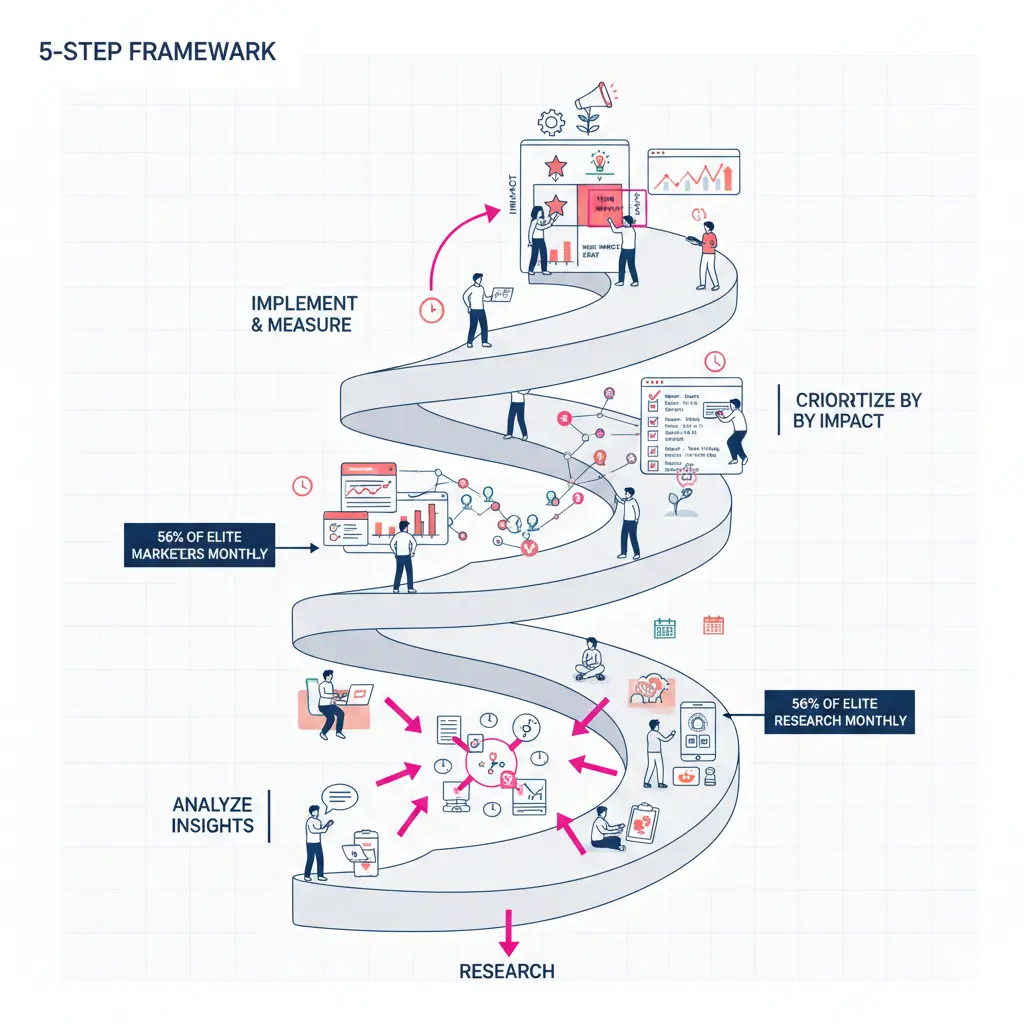
How to Do Customer Research: 5-Step Plan
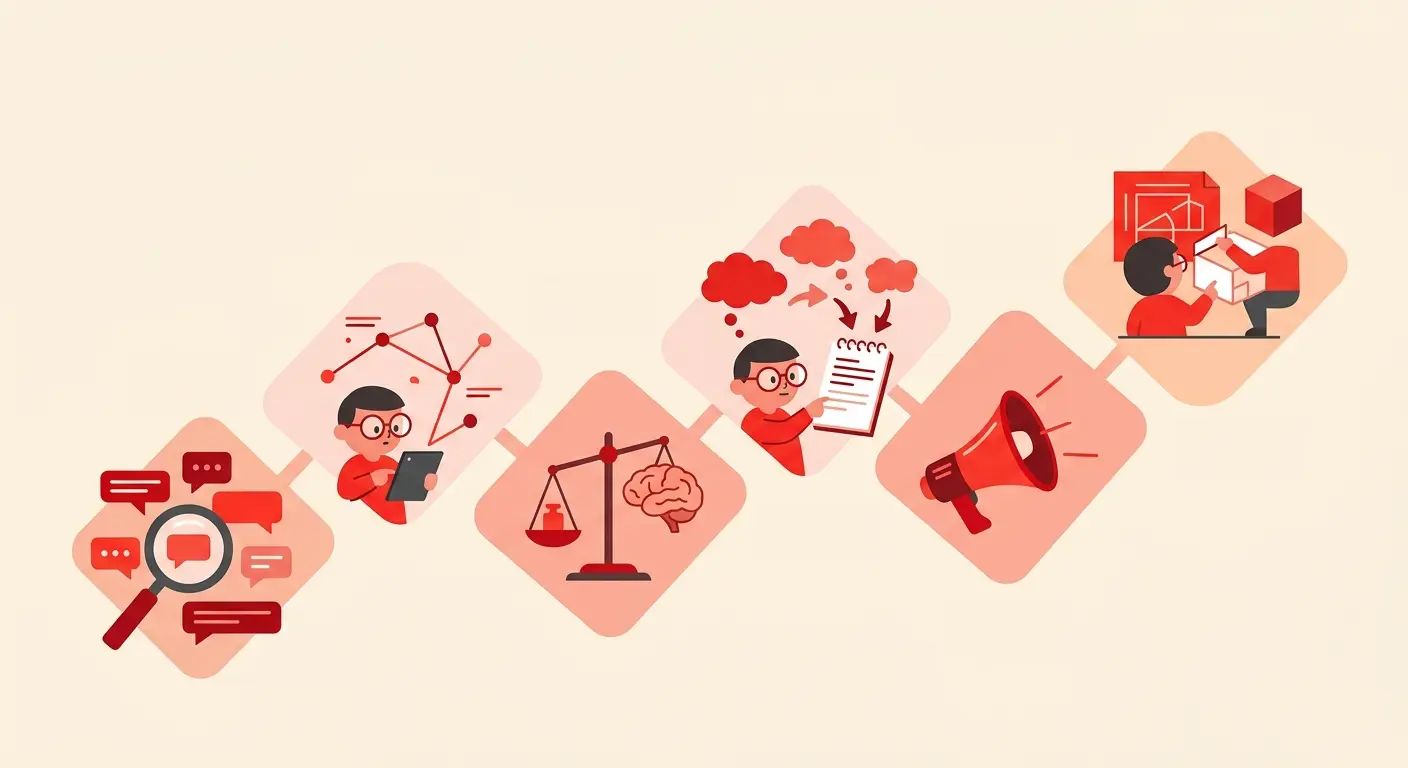
Throwing research methods at the wall and hoping something sticks won't cut it. Here's how to build a plan that actually drives decisions.
A copyable research-plan template:
- Objective: [The specific question this research answers]
- Decision it informs: [What you'll do differently based on the answer]
- Method(s): [1-3 methods from the table above]
- Audience: [Segment, and how many participants/responses you need]
- Timeline: [Start date → synthesis date]
- Success criteria: [What "enough signal to act" looks like for this study]
Step 1: Set Clear Objectives
Start with specific questions, not vague goals.
Bad objective: "Learn more about our customers" Good objective: "Understand why trial users don't convert to paid accounts"
What decisions will this research inform? If you can't answer that, you're not ready to start.
Step 2: Choose the Right Methods
Match your method to your question type.
Exploratory questions (understanding problems): Interviews, focus groups, observation Validation questions (testing hypotheses): Surveys, A/B testing, analytics Behavioral questions (how people actually use products): Analytics, session recordings, field trials
Best practice: Use 3+ methods for comprehensive insights. Triangulating data from multiple sources increases confidence.
Step 3: Define Your Audience
Who exactly are you researching?
Current customers? Prospects who didn't convert? Churned users? Competitor customers?
How many participants do you need? For qualitative research, 5-10 interviews often surface 80% of insights. For quantitative surveys, aim for 100+ responses for statistical significance.
Consider segmentation—enterprise customers might have completely different needs than SMBs.
Step 4: Collect and Analyze Data
For quantitative data: Use statistical tools like Excel, SPSS, or Tableau to find patterns and correlations.
For qualitative data: Use thematic analysis to identify recurring themes. Read through interviews and tag common topics, pain points, and feature requests.
Look for contradictions between what people SAY (surveys, interviews) and what they actually DO (analytics, observation). Those gaps reveal truth.
Step 5: Turn Insights into Action
Research is worthless if it sits in a slide deck collecting dust.
Share findings with stakeholders. Prioritize insights by impact and implementation effort. Create measurable action items with owners and deadlines.
And here's the kicker: 56% of elite marketers research at least monthly. Schedule recurring research, don't treat it as a one-time project.
The best teams repeat a version of this 5-step framework continuously, refining their understanding over time rather than treating research as a one-off project.
Start Researching Smarter, Not Harder
Customer research isn't optional in 2026—it's the foundation of product-market fit, customer retention, and sustainable growth.
The brands that win aren't guessing what customers want. They're listening, analyzing, and adapting faster than their competitors.
Your action plan:
- Blend qualitative (why) and quantitative (what) methods
- Research continuously, not just once a year
- Let AI handle scale, humans handle nuance
- Match method to question type
- Start today with something scrappy—five customer interviews beat zero
Ready to discover what your customers are really saying?
While surveys and interviews are great for direct feedback, there's a goldmine of unfiltered insights happening on Reddit right now.
Reddinbox helps founders validate ideas on Reddit, growth teams discover leads, and content teams research topics by analyzing thousands of real conversations—all backed by AI-powered intelligence.
Start discovering real customer insights with Reddinbox →
Frequently Asked Questions
What are the 4 main types of customer research?
Most frameworks group customer research into four types: primary (data you collect firsthand, like interviews and surveys), secondary (existing data like reviews and social listening), qualitative (the "why" behind behavior), and quantitative (the "what" and "how many"). Most research plans combine at least one from each pair.
What's the best platform for continuous customer research?
It depends on the source you're monitoring. For product usage, Mixpanel or PostHog run continuously by default. For Reddit and community conversations specifically, Reddinbox runs as an ongoing research agent rather than a one-time survey, surfacing new pain points and buying signals as they appear.
How many customers should I interview?
For qualitative research, 5-10 interviews per segment often surface 80% of recurring themes — diminishing returns set in past that unless you're comparing multiple distinct segments. For quantitative surveys, aim for 100+ responses to reach reasonable statistical confidence.
What's the difference between customer research and market research?
Customer research studies your specific customers — their needs, behaviors and decisions. Market research looks at the broader industry: market sizing, competitor landscapes and category trends. They overlap (competitive analysis touches both), but customer research is about the people, market research is about the category they buy in.
How do I turn customer feedback into prioritized product decisions?
Too many teams collect feature requests and survey feedback but struggle with what to do next. Adoption stays low because they're not closing the loop.
Build a lightweight research-to-decisions pipeline:
- Capture: Collect feedback through surveys, support tickets, interviews
- Tag and score: Label requests by theme, then score each by value (revenue impact, customer satisfaction) + effort (engineering time, complexity)
- Validate: Before building anything, run small experiments or follow-up interviews with survey respondents to confirm demand
- Prioritize: Build high-value, low-effort wins first. Use cohort analysis to identify which customer segments would benefit most
- Close the loop: Communicate outcomes back to people who requested features. Tell them what you built, what you decided not to build, and why
Recommended validation methods:
- Short follow-up interviews with survey respondents who requested a feature
- Feature-adopter cohorts for beta testing
- Controlled pilot releases with A/B testing to measure actual adoption vs. stated interest
How do I recruit the right participants for customer research (not just friends or power users)?
Bad recruitment leads to biased insights that mislead product and marketing decisions. If you're only talking to power users or friendly customers, you're missing the majority of your market.
Practical recruitment tactics:
- Micro-targeted ads: Run LinkedIn or Facebook ads to specific job titles, industries, or behaviors. Offer incentives for participation.
- In-product intercepts: Use survey tools to recruit users while they're actively using your product
- Partner/customer panels: Build an ongoing panel of customers willing to participate in research in exchange for perks or early access
- Named-account outreach: For B2B, directly contact decision-makers at target companies via LinkedIn or email
- Paid panels: Services like UserTesting, Respondent.io, or Great Question provide access to hard-to-reach segments
Incentive best practices:
- For B2B decision-makers: $100-200 for 45-60 minute interviews
- For consumer participants: $25-75 depending on time commitment
- For existing customers: Early access to features, recognition in product updates, or account credits
Reduce self-selection bias:
- Use screening questionnaires to ensure demographic and behavioral diversity
- Recruit from multiple channels (not just email subscribers or social followers)
- Over-recruit by 20-30% to account for no-shows
How do I get quality insights when AI-generated content and noise are everywhere?
Content saturation makes it harder to identify genuine customer intent and needs. When AI can remix surface-level answers at scale, how do you find signal in the noise?
Go deeper than surface-level questions:
The answer is depth-oriented qualitative methods and multi-source validation.
Recommended approaches:
- Long-form interviews: One-on-one conversations that go beyond prepared questions. Ask "walk me through the last time you encountered this problem."
- Diary studies: Have customers document their experiences over days or weeks, capturing context you'd miss in a one-time survey
- Contextual inquiry: Observational research where you watch customers in their actual work environment
- Triangulation: Validate claims with multiple data sources. If someone says they'd "definitely pay for this feature," check if product analytics show they even use related functionality.
Add verification steps to research:
- Request specific examples: "Tell me about the last time that happened"
- Use "walk me through" prompts: "Walk me through your workflow when you need to do X"
- Validate with usage data: Cross-check stated preferences against actual behavior in analytics or session recordings
Why this matters: AI-generated or regurgitated content often lacks the specificity, contradiction, and emotional nuance that real customer research surfaces. Go deeper, ask follow-ups, and validate claims with behavioral evidence.